



By Romina Boccia and Tyler Turman, Cato Institute
President Trump announced that he would wage a “war on fraud” during last night’s State of the Union, with Vice President JD Vance leading a new task force to root out fraud in the federal government’s welfare programs.
Welfare fraud has dominated headlines over the past few months, and Minnesota’s multibillion-dollar scandal is just the tip of the iceberg.
Fraud, however, represents only the most obvious form of dysfunction. Poorly designed federal programs have allowed states to routinely exploit administrative loopholes to expand enrollment, deploy budget gimmicks to inflate federal matching funds, and funnel money to partisan causes.
The common thread behind all these problems is misaligned incentives: States oversee programs that are largely financed by federal taxpayers. This dynamic plays out in numerous programs across the welfare state.
Supplemental Nutrition Assistance Program (SNAP)
SNAP’s financing model has federal taxpayers paying more than 95 percent of the program’s total costs, leaving states with little financial stake in preventing waste or fraud. The US Department of Agriculture (USDA) reported more than $46.3 billion in improper payments between fiscal years 2003 and 2023—the real figure is most likely higher because error rates went unreported for four years and SNAP’s quality control system ignores mistakes below $58. Besides having measurement gaps that underestimate payment errors, SNAP is also prone to at least 10 types of fraud. These include:
- Electronic benefits transfer (EBT) theft. Between October 2022 and December 2024, EBT theft accounted for more than $320 million in stolen SNAP benefits. Skimming is particularly common, and although states can remedy this by adding chips to EBT cards, 41 states have shown no indication of making the switch—likely because they’re waiting for the federal government to fund the upgrade.
- Double dipping. Last year, USDA Secretary Brooke Rollins reported that 500,000 Americans in 28 states were receiving SNAP benefits in more than one state. One way for states to prevent duplicative SNAP enrollment is to adopt the National Accuracy Clearinghouse (NAC), a data-matching system designed to prevent individuals from receiving SNAP benefits in multiple states. All states have claimed that they will implement the NAC by October 2027; however, only 15 have done so as of February 2026[1], despite the system being launched more than two years ago. One reason is that implementation requires technological overhauls to a state’s eligibility system. This, of course, costs the state money that it might be reluctant to spend, since the financial benefits of curbing fraud accrue primarily to the federal government. It’s hardly a compelling fiscal incentive to move quickly.
But fraud represents just one avenue of exploitation in SNAP. States also exploit legal loopholes to expand enrollment and avoid accountability for lax program oversight.
- Broad-based categorical eligibility allows states to extend SNAP benefits to individuals who fail to meet the program’s statutory eligibility requirements, including people with six-figure assets, millionaires, and lottery winners. Forty-three states and the District of Columbia have adopted this policy, despite its greater susceptibility to improper payments than traditional eligibility, because it allows states to draw more federal funds to finance their benefit expansions at no direct cost.
- Discretionary “no good cause” waivers allow states to exempt up to 8 percent of their caseloads from work requirements for any reason. As the Foundation for Government Accountability has highlighted, many states use these waivers retroactively to shield themselves from accountability for making improper payments when they provide benefits to able-bodied adults who fail to meet the program’s work requirements.
Medicaid
Medicaid’s spending growth has outpaced every other major federal program over the last decade, partially due to its matching-grant system: For every dollar a state government spends, the federal government provides between $1 and $9 in additional funding. Federal taxpayers paid more than 70 percent of Medicaid’s costs in FY 2024—a share that continues to grow as states shift more responsibility to Washington.
Additionally, the Paragon Health Institute estimates that Medicaid has generated more than $1.1 trillion in improper payments from 2015 to 2024. A portion of these improper payments is attributable to fraud, which remains a pervasive issue in the program. For example:
- In Minnesota, more than half of the $18 billion in Medicaid funds across 14 programs since 2018 may have been lost to fraud. This includes a $14 million fraud scheme involving a program meant to provide services to children with autism and potentially hundreds of millions of dollars going toward fraud in a Medicaid-funded Housing Stabilization Services program.
- Insurers received roughly $4.3 billion in duplicate payments for Medicaid enrollees enrolled in multiple states from 2019 to 2021, and the Centers for Medicare and Medicaid Services (CMS) reported that 2.8 million people were potentially enrolled in two or more Medicaid/Affordable Care Act (ACA) Exchange Plans in 2024.
Although Medicaid is intended to be a joint federal-state program, states have exploited gimmicks to increasingly shift Medicaid costs to federal taxpayers.
- Provider tax abuse allows states to draw federal matching funds without actually spending state dollars. States levy a “tax” on health care providers, use the revenue to claim federal matching funds, and rebate the tax money back to providers through Medicaid payments before pocketing the rest. Provider taxes grew from 7 percent to 17 percent of state Medicaid financing between 2008 and 2018.[2]
- Intergovernmental transfers (IGTs) allow state governments to borrow money from city or county governments, which then counts toward that state’s required nonfederal share of Medicaid costs, thereby increasing the state’s federal Medicaid funding. Some of the federal funds are returned directly to local governments.
In 2022, one out of every five Medicaid dollars came from federal revenues derived from schemes such as provider taxes and IGTs.
Housing Assistance and Community Development
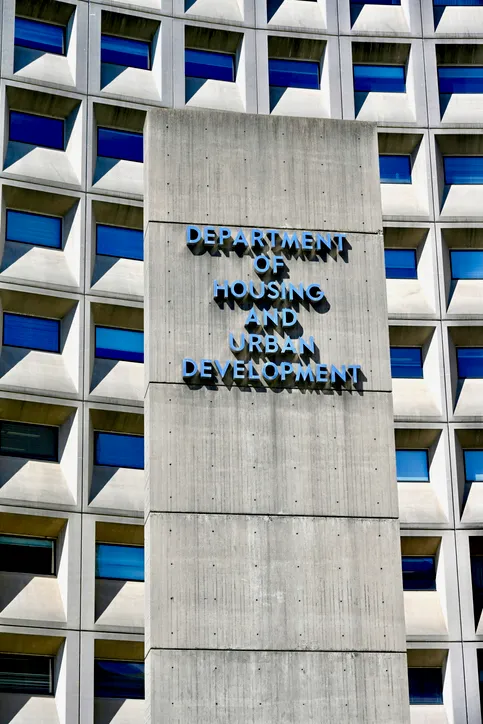
The Department of Housing and Urban Development (HUD) spent just under $50 billion in federal rental assistance in FY 2024. The federal government funds nearly 90 percent of US housing programs, with local housing authorities serving only as administrators. Predictably, states have allowed billions of dollars to slip through the cracks.
- More than $5.8 billion in questionable payments affecting more than 200,000 tenants, including more than 30,000 who were deceased, were flagged in HUD’s 2025 financial report.
- HUD spent more than $20 billion on community development (CD) in FY 2025, a fund also prone to financial mismanagement. The Disaster Recovery Fund (CDBG-DR), for example, was reported by the Government Accountability Office in 2021 to be “inherently vulnerable to fraud.” After a storm hit West Virginia, one firm received $900,000 to help develop the state’s disaster relief action plan. Later, the same firm was caught using fraudulent work records to receive more than $6.7 million in additional funding from the state.
Besides being prone to fraud, as Economic Policy Innovation Center scholar David Ditch has pointed out, CD has also “become a slush fund for political pork and is heavily used by Congress for dubious earmark projects, including handouts to left-wing activist groups.”
The Common Thread and the Common Solution
Whether through outright fraud, budget gimmicks, or earmarks funneling money to special interests, financial misconduct is a pervasive issue across America’s anti-poverty programs, including SNAP, Medicaid, and housing assistance.
These programs share a common feature: States administer benefits that are largely funded by the federal government. This gives states little incentive to reduce payment errors or resist exploiting loopholes because the costs of mismanagement mostly hit federal taxpayers rather than their own coffers.
Congress can take meaningful action to remedy this issue and realign incentives by requiring states to operate within fixed budgets, rather than rely on potentially unlimited federal matching funds.
For example, last year’s Republican Study Committee (RSC) proposed block-granting several entitlement programs, including SNAP, Supplemental Security Income, and Medicaid. Both the House Budget Committee’s FY 2025 resolution and last year’s Ways and Means Committee budget options proposed per-capita spending caps on Medicaid, capping federal matches at preset amounts rather than matching whatever states spend. This year’s RSC budget proposes consolidating several housing programs into a single fund with a state cost-share. Although it also proposes cutting spending on CD block grants, last year’s budget suggested eliminating them entirely.
Block-granting welfare programs would curb states’ abuse of loopholes and gimmicks to draw more federal dollars to finance benefit expansions. Additionally, it would give them more skin in the game to be judicious with spending because every dollar lost to mismanagement would be a dollar unavailable for legitimate beneficiaries in their state.
But as the federal government’s housing programs show, not even block grants are entirely immune to the financial abuses caused by misaligned incentives. As such, the best solution is to end federal aid to state programs altogether.
When state policymakers answer to their taxpayers for every dollar spent, they will have a greater incentive to prevent fraud, eliminate waste, close exploitable loopholes, and ensure their constituents’ dollars fulfill their welfare programs’ purposes.
Prosecuting fraudsters and tightening spending rules are necessary. But as long as states spend federal money with minimal accountability, they’ll keep finding creative ways to do exactly that.
[1] The states to implement the NAC as of February 25, 2026: Iowa, Montana, Missouri, Louisiana, Utah, Illinois, Kentucky, Pennsylvania, Tennessee, Arkansas, New Mexico, Georgia, Ohio, Kansas, and Wisconsin.
[2] The One Big Beautiful Bill Act established a moratorium prohibiting all states from establishing new provider taxes or from increasing existing taxes, as well as reducing existing provider taxes for states that adopted the ACA expansion. The Congressional Budget Office estimated that this policy change would reduce federal Medicaid spending by $226 billion over 10 years. Last month, CMS made further progress in closing this loophole by eliminating a specific provider tax used in seven states. CMS estimates that this will save the federal government more than $78 billion over 10 years.
Romina Boccia is director of budget and entitlement policy at the Cato Institute, Tyler Turman is a Research Associate in Budget and Entitlement Policy.