



By Leah Locke, American Consumer Institute
The election of Zohran Mamdani as New York City’s new mayor has pushed the housing affordability debate back to the forefront. Too often, proposed “solutions” reveal a misunderstanding of proper functioning markets. Radically overhauling existing and interconnected frameworks are difficult to implement and rarely succeed.
However, it’s seemingly insignificant conditions that many times have the most impact on housing. One of these is the tri-merge credit reporting model. This niche subject has a profound impact on consumer access to the mortgage market which most consumers are not aware of.
The Federal Housing Finance Agency (FHFA) is the conservator of Fannie Mae and Freddie Mac, which hold a majorityof the mortgages in the United States. Mortgage lenders want to sell their mortgages to Fannie and Freddie because it provides liquidity for the mortgage lender. But for Fannie and Freddie to consider purchasing these mortgages, they have requirements set by the FHFA that the lender must meet. This ensures mortgage viability as the government takes on the risk.
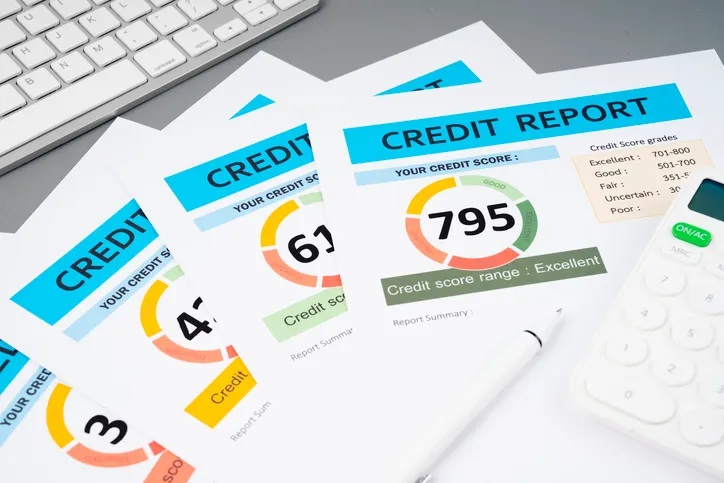
One of those requirements is pulling a tri-merge credit report. This tri-merge report gathers one score from each of the three credit bureaus: TransUnion, Equifax, and Experian, and pulls them in one single report. These scores are then given back to the mortgage lender for underwriting and the median (middle) number is used to assess whether the mortgage applicant qualifies.
The system has by and large benefitted consumers since it was instituted in the mid-1990s, but the FHFA issued a conservatorship directive in October 2022 that would have allowed lenders to use either a bi-merge or tri-merge report for mortgage underwriting. This meant that only two of the three credit scores would be pulled. In July FHFA Director Bill Pulte reversed the directive, so consumers are safe, for now.
But the saga of the tri-merge credit reporting model may not be over as some interest groups in Washington are now pushing for its revival or that of a single-pull credit report for mortgage underwriting. This is concerning because research shows the bi-merge credit report would have been a disaster for consumers.
A study by TransUnion on the bi-merge model revealed the weakness of this new credit report model that could leave hundreds of thousands of people from mortgage consideration. TransUnion simulated a move to the bi-merge model by randomly dropping one credit score from those who were in the 620 to 699 range. The results were staggering. TransUnion estimated roughly 1.9 million people would see their credit score shift below the range to make them eligible for mortgage consideration. A follow-up study found that moving to a single-pull would make those effects even more pronounced with 4.4 million consumers losing mortgage eligibility.
But not everyone can agree on the importance of the tri-merge credit reporting model for access to homeownership. According to then-Consumer Financial Protection Bureau (CFPB) chair, Rohit Chopra, the bi-merge model was the most economical citing the rise in tri-merge credit score report costs. Their costs were amounting to anywhere between $40 and $60.
Reports show that there were price hikes for credit scores in early 2024. But prices of reports are relative compared to the money that can be saved with better credit scores. If someone’s best credit score is the one that’s dropped in the bi-merge or single-pull report, they may end up paying higher monthly mortgage payments. An article by Experian reports a 30-year conventional mortgage with a FICO score of 620 would pay $2,033 a month. But a FICO score of 640 would pay $2,000 a month. These are savings that add up.
These repeated revisions reveal typical misdirection and misapplied attempts to save consumers money without determining the consequences of such actions. Housing solutions are not found in reorganizing an entire ecosystem that sits contrary to sound economic solutions, such as Mamdani claims. This is a true disaster in a housing system as complex as the US. Rather, solutions exist in determining the current requirements in place and delving deeper into the repercussions of small changes before implementing them.
As is often the case, small things are important. One wrong tweak can cause millions to lose out on a part of the American dream. But determining changes that may have small, positive effects can lead to greater homeownership access. And that is a sustainable way to help consumers gain access to a house they can afford.
Leah Locke is a policy analyst at the American Consumer Institute, focusing on finance and insurance policy. The American Consumer Institute is a nonprofit education and research organization. For more information about the Institute, follow on X @ConsumerPal.