




By Steve Swedberg, Competitive Enterprise Institute
“If it talks like a duck and quacks like a duck, it must be a duck.” That phrase is not reserved for ducks. It is often invoked about prediction markets, where some view them as akin to gambling. Prediction markets, after all, are exchanges where participants buy and sell contracts tied to future events, including elections, economic data releases, and regulatory decisions.
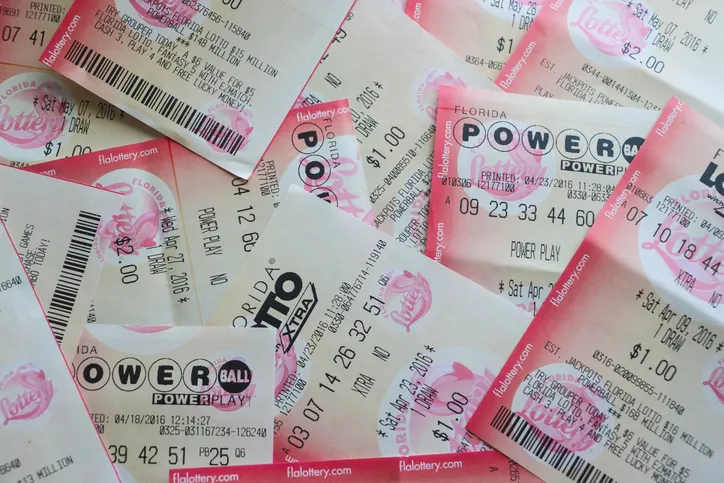
The similarities to gambling are easy to see. Both involve risk and uncertainty. Both can result in gains or losses depending on whether participants correctly anticipate future events. People put money on uncertain outcomes, some participants are chasing profits, and winners collect at the expense of losers. To many, that sounds a lot like gambling.
If that were the full picture, calling prediction markets gambling would be reasonable. Indeed, that perception has fueled calls for greater scrutiny, including the Commodity Futures Trading Commission’s (CFTC) recently proposed frameworkto clarify the regulatory treatment of prediction markets.
At the same time, states including Nevada, New Jersey, and Maryland have arguedthat prediction markets must cease and desist or obtain casino-style gambling licenses to operate within their borders. Platforms such as Kalshi dispute that view and argue that federal regulation by the CFTC preempts state gambling laws, with courts so far issuing mixed rulings.
But stopping at the similarities obscures the features that matter most. The question is not whether prediction markets resemble gambling in some respects, but whether those similarities are their most salient features.
There is a reason why “the house always wins” is an adage for casinos: most gambling institutions are structured around a house that profits regardless of the outcome. The house acts as the counterparty to bettors and sets odds designed to ensure a profit margin, commonly known as the “vig.” This built-in advantage means the casino’s interests are fundamentally at odds with those of its customers.
Prediction markets operate differently because participants trade with one another in a peer-to-peer exchange, meaning that market participants take opposite sides of a contract instead of wagering against a bookmaker. While platforms may charge transaction fees, they do not take directional positions on outcomes or profit when users lose. Instead, they function as neutral marketplaces that match opposing views about future events.
Because of this structure, prices emerge from continuous competition among traders with differing information and beliefs. As new information arrives, participants can adjust or exit positions, allowing expectations to be rapidly incorporated into prices. In structure and operation, this mechanism more closely resembles a futures exchange than a casino floor — a distinction recognized in a CEI-led coalition letteron prediction market regulation.
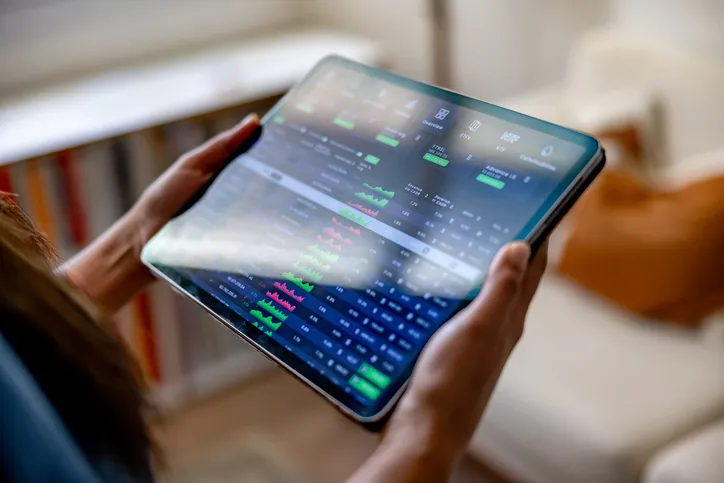
The distinction between prediction markets and gambling becomes clearer when examining their economic function. Like most financial markets, they attract risk-takers who speculate on differences in expectations in search of profit.
That alone does not make prediction markets equivalent to gambling. These speculators play an essential role in stock, commodity, and futures markets by providing liquidity and improving price discovery. This structure shapes how prediction markets incorporate dispersed information.
Prediction markets can also serve a hedging function. Hedging is the practice of reducing exposure to risk by taking a position that gains value if an adverse outcome occurs. As CEI Director of Finance Policy John Berlau notes, businesses and organizations exposed to political, regulatory, or economic risks can use prediction markets to take positions that offset uncertainty in those areas, much like a farmer can hedge against crop failures or an airline can hedge against fuel price volatility.
In this respect, prediction markets more closely resemble other financial markets, such as futures, options, and foreign exchange markets.
Yet risk transfer is only part of the story. Unlike the recreational activity of gambling, prediction markets generate a powerful asset: real-time forecasting data. As Berlau has noted, prediction markets allow participants to translate dispersed knowledge about elections, sports, and other events into prices that reflect collective expectations.
Empirical research finds that these prices are as accurate as — and in many casesmore accurate than — polls, expert judgment, and alternative forecasting methods in high-liquidity markets. The accuracy of these forecasts depends on the process of price discovery through which new information is incorporated into prices.
A London Business School study found that about 3 percent of traders account for most price discovery. That does not mean that the other 97 percent of traders are unhelpful. On the contrary, the remaining traders provide the liquidity necessary to maintain prediction markets and incorporate information into prices.
This structure closely resembles equity, foreign exchange, and commodity futures markets, where a small group of informed traders sets marginal prices while broader participation facilitates price discovery. By aggregating dispersed information into a single market signal, prediction markets can help traders, businesses, policymakers, and the public make better-informed decisions in the face of uncertainty.
The debate over prediction markets is not ultimately about wagering but about whether policymakers will regulate an institution according to its appearance or its function. Prediction markets transfer risk, aggregate information, and generate forecasts that can improve decision-making across society.
Treating them as gambling risks imposing regulatory burdens that could limit experimentation, forecasting innovation, and the development of new information markets. When regulators mistake a forecasting tool for a casino game, innovation becomes the first casualty.
Steve Swedberg is a Policy Analyst with the Center for Economic Freedom, focusing on financial, monetary, and transportation policy.