



By Steve Swedberg, Competitive Enterprise Institute
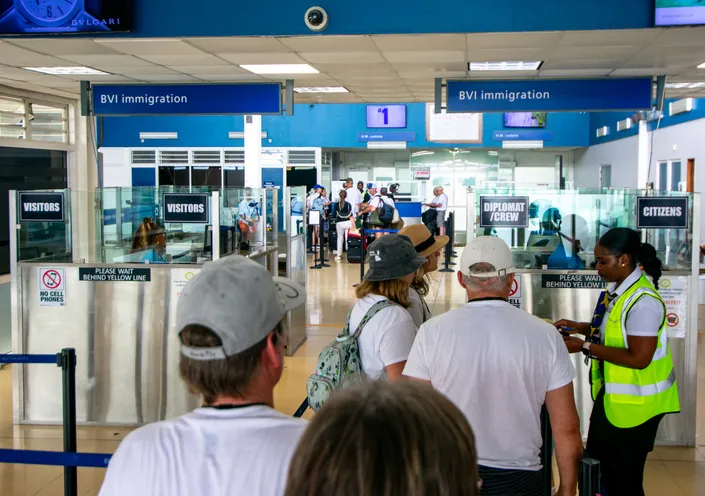
Imagine arriving at the airport for a long-anticipated vacation, only to face a line longer than an airport runway. The excitement quickly gives way to the stress of possibly missing your flight.
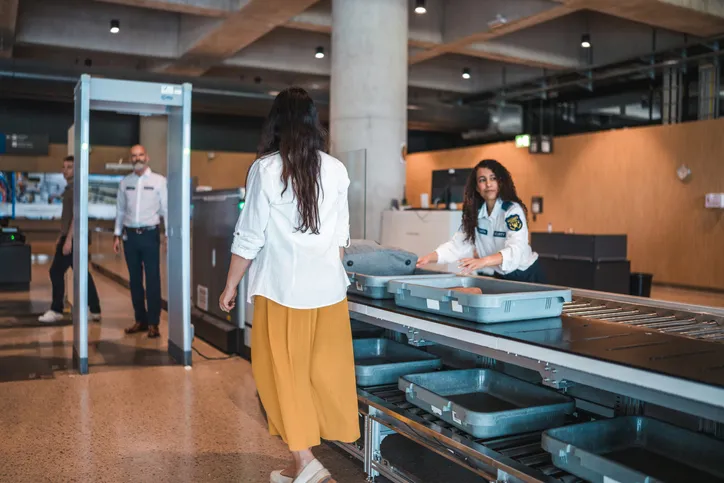
Right now, many travelers do not have to imagine. Since the partial shutdown of the Department of Homeland Security (DHS) on February 13, 2026, airports have been strained, including 50,000 Transportation Security Administration (TSA) screeners working without pay.
As a result, the TSA is operating at partial capacity. What should be a quick checkpoint has become a frustrating, time-consuming ordeal so soul-crushing that you might wonder what you did in a previous life to deserve it. Due to these delays, airports are advising travelers to arrive three to five hours early.
This mayhem is more than a temporary breakdown; it exposes why the TSA should be privatized.
The perils of a post-9/11 hangover
When governments respond to a crisis, they rarely think small. The 2007-2008 financial crisis produced Dodd-Frank and the Consumer Financial Protection Bureau. The heavy hand of the Sarbanes-Oxley Act was in response to the Enron scandal. The COVID pandemic came with expansions of government power in seemingly every corner of life. Congress is currently trying to pass the Railway Safety Act, which, despite its title, will not improve railway safety. The TSA is no exception to this rule.
The TSA was created in the aftermath of the September 11 attacks. The American people were understandably shaken by the national tragedy and lawmakers naturally wanted to reassure the public that such an attack would never happen again. In an effort to respond quickly, Congress enacted the Aviation and Transportation Security Act, creating the TSA, which was signed into law on November 19, 2001.
Crisis-induced legislation tends to prioritize visible action over thoughtful design and implementation. In the case of airport security, the solution was not to improve oversight or strengthen existing systems; it was to federalize the entire process in a two-month period.
While the TSA was good for political optics, it created a bureaucracy shaped by urgency rather than evidence. More than two decades later, the TSA remains a textbook example of why policymaking should not be done in a panic.
TSA screening everything except threats
The core justification for the TSA is simple: airport security must stop weapons and explosives from reaching airplanes. Yet oversight agencies have repeatedly found serious vulnerabilities in the screening process.
In 2006, congressional hearing materials noted failure rates of roughly 90 percent. In 2015, a DHS Office of Inspector General report found that undercover investigators successfully smuggled mock weapons or explosives through checkpoints 67 out of 70 times, a failure rate of 95 percent.
After 2017, DHS classified all detailed results, effectively removing even this limited data from public view. In a 2017 House Homeland Security Committee briefing, lawmakers were told that undercover investigators evaded TSA security in over half of attempts, with some estimates reaching 70 to 80 percent. The most recent public view, a 2019 Government Accountability Office report, lacked key metrics because the underlying data remained classified.
For an agency that screens millions of passengers annually, the absence of publicly available performance metrics raises serious questions about transparency and accountability. The public literally does not know the airport security process is worth the hassle.
Sole-searching silliness
As if the screening failures were not problematic enough, the TSA has built much of its public profile on security theater – highly visible procedures that create the appearance of safety while doing little to improve it.
The TSA’s “shoes off” policy is a striking example of bureaucratic overreach and inefficiency. The rule originated after the so-called Shoe Bomber attempted to ignite explosives hidden in his shoes on a flight in 2001. Despite the policy’s purported urgency, the TSA did not advise travelers to remove their shoes until 2006, which highlights a disconnect between perceived threat and implementation.
Moreover, the TSA never intercepted a shoe-bomb attempt, even though it remained in effect until last year. Over nearly two decades, this policy imposed massive costs. The Cato Institute estimates that removing shoes cost Americans 5–10 minutes per trip across roughly 900 million trips per year. Over the policy’s lifespan, that adds up to a time-suck of 155,628 to 311,255 years and $83 billion taxpayer dollars, all for a rule that never stopped a single shoe-bomb attack.
Against this backdrop, it makes sense that few other countries adopted a comparable measure. Shoe-borne explosives have never been successfully used in an airport terrorist attack, indicating the policy imposed significant inconvenience without any security benefits.
TSA liquid rule makes waves, but does not make security safer
Another example is the TSA’s 3‑1‑1 liquids rule, which limits passengers to small containers of liquids in carry‑on bags.
This restriction was adopted after a 2006 transatlantic aircraft terror plot, but has persisted for nearly two decades despite improved screening technologies. Most experienced travelers now say the rule is outdated, and CEI experts John Berlau and Ryan Young note that liquid limits have never been tied to a real explosive threat at checkpoints.
Monopoly meets self-regulation
If stopping weapons and explosives is TSA’s core mission, why does the agency so often fall short? The problems with TSA’s performance start with monopoly. Just as my previous analysis showed that reduced competition leads to higher prices and lower quality for passengers, a lack of competition in airport screening removes the usual market pressures that drive efficiency and innovation.
On top of that, TSA regulates itself. While airports or local authorities oversee other aspects of airport security, the TSA both sets the rules and enforces them. This eliminates many normal mechanisms that drive improvement. The result is an agency with little incentive to perform well, innovate, or respond to traveler frustrations.
That lack of accountability has occasionally required outside intervention. In 2015, CEI filed a lawsuit against the TSA for deploying airport body scanners without completing the legally required rulemaking process, which forced the agency to comply with a court order it had delayed for years.
Privatize airport security
The recent airport disruptions are not simply the result of a government shutdown. They are a reminder that the TSA was built as a crisis-era bureaucracy and still operates like one more than two decades later. From persistent screening failures to costly security theater and a structure defined by monopoly power and self-regulation, the agency lacks incentives that drive improvement in other sectors of the economy.
Privatizing airport security is neither a radical nor untested idea. Roughly two dozen US airports already use private contractors under the federal Screening Partnership Program.
Furthermore, a Reason Foundation analysis found that 44 percent of the world’s airports are privatized, including 75 percent in Europe and 66 percent in Latin America. Cato Institute research illustrates how private screening can be as good as or better than government-run systems. Privatization lets airports hire specialized screening companies with incentives to perform well rather than rely on a rigid federal bureaucracy.
When these results are weighed against the TSA’s $10.6 billion FY2025 budget, intrusive passenger procedures, and the rules that provide little security benefit, the case for privatization becomes clear.
A competitive system would allow airports to select providers based on performance and replace those that fail to meet expectations. For well over a decade, CEI has called for privatizing airport security. Two decades of TSA dysfunction show that reform is long overdue.
Steve Swedberg is a Policy Analyst with the Center for Economic Freedom, focusing on financial, monetary, and transportation policy.