




By Wayne Winegarden, Pacific Research Institute
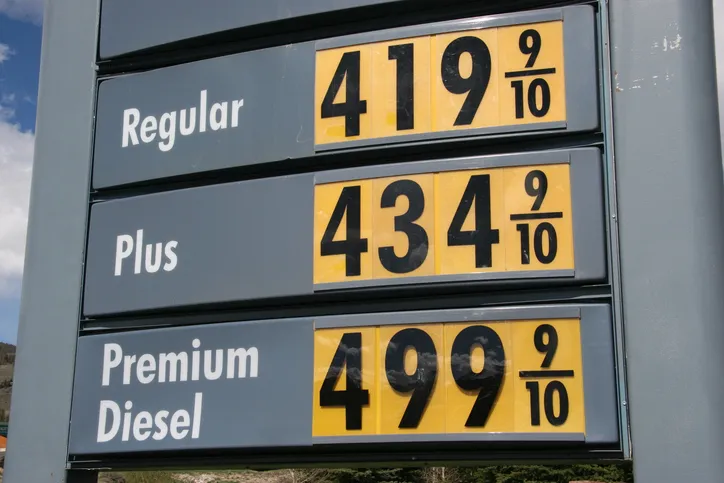
The latest inflation data showed prices increased 3.8 percent year-over-year in April, confirming what many families already know – life has become increasingly unaffordable. Nowhere are these costs pressures more evident than the price of gasoline and electricity.
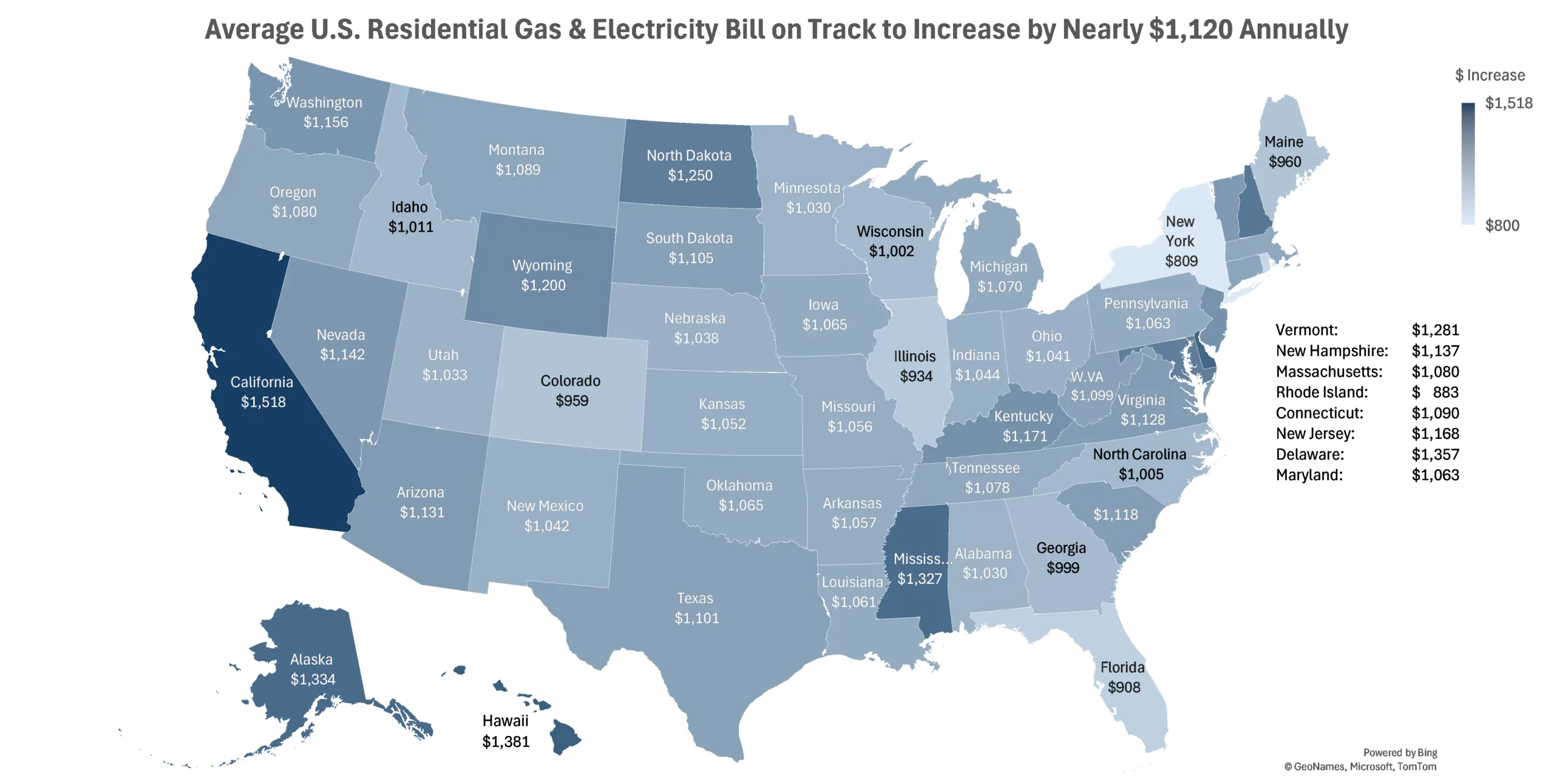
Californians face a $1,518 increase in energy costs – higher than the $1,120 increase faced by the average U.S. family and much higher than $809 increase New York residents will see.[1]The below map illustrates the estimated increase in annual energy expenditures between 2025 and 2026 should the current elevated prices persist for the remainder of this year and families do not reduce their energy consumption.
These estimates provide several important insights.
First, policies matter. Californians already pay some of the highest energy costs in the country due to its climate policies such as the state’s cap and trade program, greenhouse gas mandates, and high taxes. These same policies also expose residents to higher cost increases during energy shocks. This energy vulnerability is why Californians face the highest annualized cost increases in the country despite using less energy per household than the average U.S. family.
Second, unique energy situations also matter. New York, which also imposes anti-growth energy policies, faces a smaller annualized cost increase because residents in New York City purchase significantly less gasoline than elsewhere in the country. New York’s experience is not replicable in other states, consequently.
Third, if allowed to persist, the current inflated energy prices will significantly constrain families’ budgets in 2026. One response will certainly be a reduction in energy use. While this will save money, it will also mean that the summer will feel hotter, and the winter will feel colder. There will also be fewer family road trips this summer.
Of course, energy is a necessity. This means that there is only so much energy economizing families will be able to do (at least in the near term). The result will be that overall spending on energy will increase significantly, which will cause spending on everything else to be less. This reduced consumer spending portends a weaker economy in 2026.
Worsening these impacts, the costs for many other products we consume every day will also increase because higher energy prices increase production costs for most other products, especially food. These higher costs will further constrain consumer budgets and weaken the economy further.
President Reagan noted that “inflation is as violent as a mugger, as frightening as an armed robber and as deadly as a hit man.” The current runup in prices, on top of the inflationary surge following the Covid-19 pandemic, starkly demonstrates Reagan’s wisdom. If the current hostilities in Iran persist, families should buckle up for a bumpy ride.
[1] The 2026 annual Total expenditures are estimated based on the current price and consumption data from the Energy Information Administration (EIA), which is compared to the estimated annual expenditures in 2025.
Dr. Wayne Winegarden is a senior fellow in business and economics at the Pacific Research Institute.