



By John Seiler, Pacific Research Institute
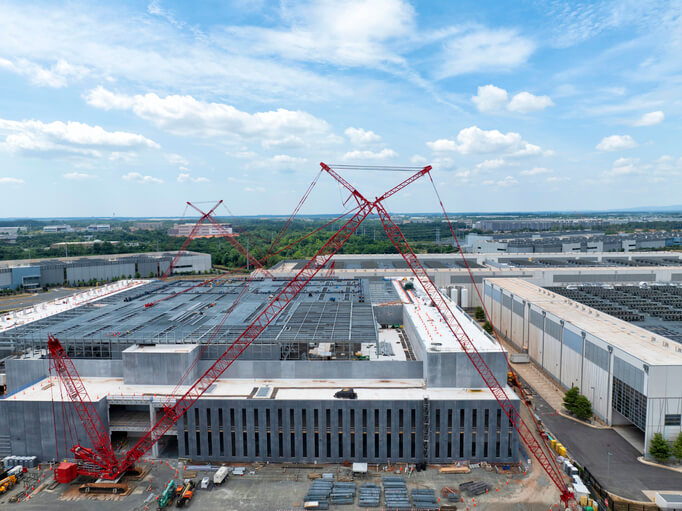
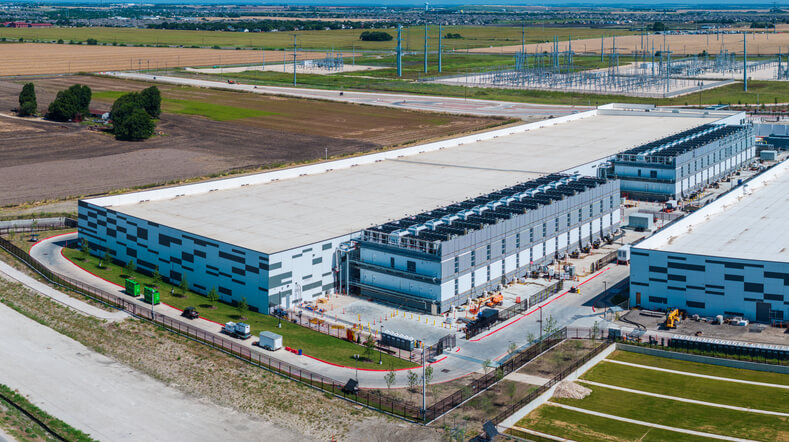
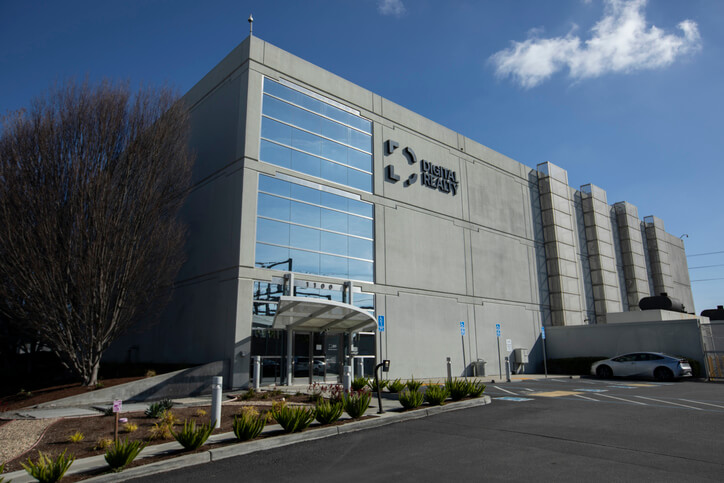
San Francisco and Silicon Valley thrive on data centers. So does California overall. The data centers are the nervous system of the artificial intelligence boom that’s generating record profits, while filling local and state government coffers to overflowing.
But much like the provincials out there in Flyover Country, the locals here are objecting to the centers being built near their neighborhoods. One of the election takeaways nationwide is that Americans are increasingly hostile to data-center construction.
San Francisco is home to Anthropic/Claude and OpenAI/ChatGPT, two of the top upstart AI companies. On October 6, the Board of Supervisors unanimously passed a 45-day moratorium on building new centers in the city. Bloomberg Law reported the pause “can be extended for roughly two years, as officials consider more permanent restrictions.”
Supervisor Shamann Walton, who represents Bayview-Hunters Point, said when he announced the plan that nothing should be approved until the city understands the consequences. His district holds two of the city’s data center sites, and residents there have complained for decades about pollution.
On the same night, the Oakland City Council passed a similar 45-day moratorium on new data centers. A few speakers argued for the jobs and revenue, as they had when a council committee advanced the measure. The website for the national corporate law firm Holland & Knight, which has an office in San Francisco, on October 21 noted Oakland’s planning code doesn’t even define “data center” and has no standards for noise, generators or water.
Those are the big cities. With the data centers growing like a wildfire in the Bay Area, small cities are passing limits as well.
One example: Oakley passed a 45-day moratorium in April and in May approved a 10-month extension. Then on October 20, reported The Press, “the Oakley Planning Commission passed a resolution 4-0 with one abstention recommending the City Council approve a total ban on data centers. The City Council will deliberate on a final approval at a future meeting.”
Santa Clara, home to Nvidia and Intel, has been more welcoming, but is close to being built out, hosting 56 data centers, with two more coming. KTVU reported October 6: “The industry has proven highly lucrative for Santa Clara, contributing $35 million annually in taxes directly into the city’s general fund. However, high power demand prompted the city’s municipal utility, Silicon Valley Power, to stop accepting new data center applications in 2023. Santa Clara officials are launching a year-long interdepartmental review of environmental, water, power and quality-of-life impacts before updating local development rules.”
San Jose, home to Cisco, Adobe, Zoom, eBay and PayPal, has taken the route of regulate but don’t pause. The Mercury News reported October 27, “A new data center along Charlotte Drive in South San Jose could be operational in three years should city officials give final approval for the project.”
It would be 15 acres carved out of an existing site where the rest would remain Western Digital’s campus. “During a hearing to approve the lot split, a public speaker warned that ‘thousands’ of residents were poised to oppose the data center when the proposal proceeds through a full review, asking that there be ‘more transparency’ about the subdivision.”
Enter the state government, which in May announced a $16.5 billion unexpected tax surge over the next three years from AI profit-taking. That allowed Gov. Gavin Newsom to balance the fiscal 2026-27 budget and erase a $2.9 billion deficit from his January estimate. “It shows the nature of the economy in this state — the nature of the growth engine,” he said.
But Newsom, leaving office in January, is preparing a potential presidential run and knows data centers aren’t popular in such key primary states as South Carolina, Michigan and Pennsylvania. On September 21, he signed seven data center bills that, in the CalMatterssummary, “aim to force the data center industry to pay its own way in California.” Three bills make data center operators pay more for infrastructure costs. Three mandate resource use disclosures. And the seventh bans blanket environmental quality review exemptions.
Whatever damage the bills do to AI growth in the Golden State will hit while he’s out campaigning in the golden cornfields of Iowa. Is there a way forward? I think there is. And California could be a model for how local hostility is tempered by sensible compromises. Here are some ideas:
Make the machines flexible. Silicon Valley Power and Nvidia-backed Emerald AI are piloting data centers that trim power use during grid stress. The utility created a Flexible Load Interconnection Program offering faster, larger grid access to operators who commit to verified flexibility.
Require clean power and water. A lawsuit over a Pittsburg data center was settled by an agreement between the city and the Center for Biological Diversity that included using 100% renewable energy and recycled water for cooling. Amazon said its Gilroy facility will rely on air cooling most of the year.
Share the upside. KQED reported on August 13 that a City Council committee voted “to fold community benefits into their ongoing drafting of standards for data centers, and to study whether a share of the tax revenue those facilities generate could be reinvested in a defined area around each site.”
Don’t subsidize them. Cities ought to be open to their construction, but shouldn’t use taxpayer dollars to subsidize them, as is increasingly the case.
In sum, the struggles in California are an opportunity to find ways to make data centers profitable for everybody, not just the trillion-dollar companies profiting from them. San Francisco’s hypocrisy needs to be overcome. And Oakland and other lagging cities need to become more reasonable. The solutions could become national models.
Deals would mean the data centers are built, pay their own way, disclose water use, don’t stress the grid and pass some of the profits to local projects. Sponsoring AI classes for local high schools and colleges would be a nice touch.
John Seiler is on the Editorial Board of the Southern California News Group.