



By Steve Swedberg, Competitive Enterprise Institute
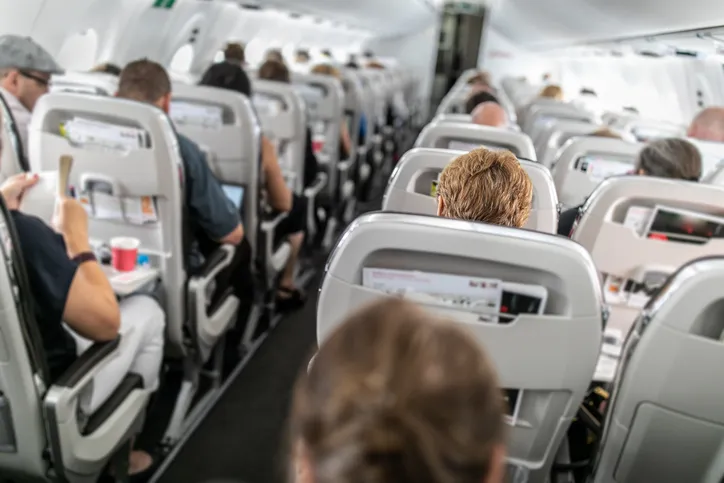
Aircraft cabins are under more pressure than ever. With every inch of space accounted for, airlines are making increasingly visible choices about who gets how much room. Starting next week, the Southwest Airlines will require passengers who need more than one seat to pay for additional space. Critics describe the policy as a “discriminatory tax” against plus-size customers.
However, the real story is not about a moral failing, but the economic scarcity of aircraft cabin space. Even as airline seat prices have fallen in real terms since the 1980s, passengers have lost 2 to 5 inches of legroom pitch and 2 inches of seat widthin that same time period. Shrinking seat sizes are compounded by increases inaverage adult body size and rising demand for airline travel.
Shrinking seats are not about culture wars or “greedy” airlines. At the core of the issue is a lack of effective competition in the US airline market, one so structural that it squeezes both consumers and cabin space.
The US has a concentrated airline market
According to data from the Bureau of Transportation Statistics, the four largest carriers – Delta, American, Southwest, and United – control 68.5 percent of domestic passenger traffic in terms of passenger miles. In terms of seat capacity, the Big Four account for 75 percent of the market. In practice, the US airline industry behaves much like an oligopoly due to a small number of large carriers dominating capacity and routing decisions. By comparison, European and Asian domestic markets are more fragmented, giving passengers a wider range of airline options and a less concentrated network of carriers. This led to the rise of pan-European discount carriers like RyanAir and easyJet that compete aggressively with national carriers.
How market concentration shrinks seats
Market concentration shapes airline incentives in ways that directly affect passengers. In a competitive market, airlines must attract travelers with comfort, amenities, and value. In the highly concentrated US market, however, the threat of losing passengers is low, reducing pressure to compete on comfort. As a result, carriers have an incentive to maximize revenue per flight by fitting more passengers into each plane, rather than improving seat size or amenities.
Trump’s proposed cap on credit card interest rates, which would cut revenue from airline co-branded cards, illustrates how concentrated carriers face fewer competitive pressures to absorb financial constraints without passing costs onto consumers. In a less competitive market, airlines can maintain profitability even under revenue pressure, which further reduces incentives to improve service or expand capacity.
Fewer competitors mean passengers have limited alternatives if they are dissatisfied with cramped cabins. As illustrated by this research from the International Journal of Industrial Organization, increased competitive pressure in US airline market leads incumbent carriers to provide better quality outcomes, including more frequent flights and improved on-time performance.
FAA rules shape airline market concentration
The fact that the US has one of the most concentrated airline markets in the developed world is no coincidence. FAA regulations have reinforced market consolidation, which influences everything from who can access airport gates to which airlines can operate certain routes. Over time, these rules have created structural advantages for large carriers and considerable barriers for smaller competitors to enter the market. This market concentration limits the natural competitive pressures that would otherwise encourage airlines to improve service, expand capacity, or increase seat comfort. The subsequent sections explore three specific deregulatory measures that could help achieve this goal.
Airport slot controls
Airport slot controls are government-mandated limits on the number of takeoffs and landings that an airline can operate at a congested airport. Although these slots are meant to reduce congestion, they typically favor incumbents while making it more difficult for smaller or new airlines to enter key markets.
Research shows that when slots are removed or relaxed, competition increases and fares fall. A study from the Economics of Transportation showed that removing slot restrictions at Newark airport lowered fares by about 2.5-2.6 percent. Another study explains how FAA slot policies induce incumbent airlines to hoard slots in a way that makes the experience less customer-friendly, including charging higher fares, choosing smaller aircraft, and increasing frequency without improving service quality.
While slot controls apply to only three US airports (JFK, LaGuardia, and Reagan National) which accounted for 6.2 percent of enplanements in 2024, these hubs handle a disproportionate share of high-demand domestic and business traffic. These controls effectively limit the ability of smaller airlines to expand into more lucrative markets and international routes, which reduces competitive pressure in domestic and international airline markets alike.
More to the point, small regulatory changes at a few high-traffic airports can directly affect ticket prices, flight options, and the comfort of passengers. Slot controls are not simply technical rules. They shape the everyday experience of travelers and the incentives that airlines have to compete for your business and make your flight a better customer experience.
Gates that gatekeep
Exclusive-use gate leases give a single carrier long-term, exclusive rights to airport gates and associated facilities. Under such arrangements, other airlines generally cannot use those gates without the incumbent’s approval, even if they remain unused at times. These arrangements differ from common-use facilities, where the airport operator controls gate assignments on a flexible basis. In the US, many airports have historically relied on exclusive leases as a way to secure revenue and financing, but policy analysts have raised concerns that such leases can limit competitive access for smaller and newer carriers.
Even when exclusive-use leases expire, incumbent airlines often retain de factocontrol of gates due to their embedded operations, preferential-use arrangements, and airports’ incentives to renew with established carriers. This concentration of access not only restricts market entry but influences operational outcomes more generally. A paper from the Korea Aerospace University found that airport governance that reinforces incumbents’ dominance, much like the exclusive-use leases do, allows dominant carriers to dictate gate use, block competitors from expanding, and squeeze passengers into smaller, uncomfortable seats.
These findings align with the Reason Foundation’s report on airport leases, which documents how historical contract structures provided incumbents with this control and left airports with limited flexibility to allocate terminal resources to new entrants. To restore competition, airports should shift toward common-use gates and flexible terminal management so that access is determined by demand rather than incumbency. Meanwhile, the FAA should enforce grant assurances and ensure that the leases and practices do not lock in incumbents and block new competitors.
Competition without borders
The US is quite restrictive in allowing foreign airlines to compete on domestic routes or to own significant shares of US carriers. These restrictions shield domestic carriers from competitive pressures that would incentivize improvements like expanding seat size. Empirical evidence from the EU demonstrates that opening routes to global carriers lowered fares by 6-23 percent (depending on the country) while increasing demand for airline services by 27 percent. Similarly, research on Gulf carriers entering US international markets highlights how their presence led to higher passenger traffic and lower fares for US carriers on competing routes.
Whether it is the EU data or the Gulf carrier case study and its effects on international flights, the underlying principle remains the same. When new competitors are allowed into a market, incumbents face real pressure to improve pricing, capacity, and service quality, including larger seats.
From cramped to competitive
Whether it is easing slot and gate restrictions, opening access to foreign carriers, or increasing market flexibility, the issues facing the airline industry are not theoretical. Decades of research consistently show that competition is the engineer driving better outcomes for airline passengers. A meta-analysis of over 120 studies on airline competition shows that competition affects not just prices but also service quality, network choices, and overall market dynamics. Greater competitive intensity aligns with better outcomes for passengers, highlighting why reforms that open markets and reduce structural barriers can improve consumer welfare.
Southwest’s seat policy is one visible symptom of a market shaped by the FAA’s burdensome regulations that entrench incumbents. By removing these regulatory constraints, the FAA has the potential to unlock more competition in the domestic airline market, thereby giving passengers more choices and enabling carriers to compete not solely on price, but also on comfort and quality. When airlines compete, everyone gets more legroom, either metaphorically or sometimes quite literally.
Steve Swedberg is a Policy Analyst with the Center for Economic Freedom, focusing on financial, monetary, and transportation policy.