




By Dr. Marco Navarro-Génie, Frontier Centre for Public Policy
Ottawa's tariffs protect Central Canadian industry but expose Prairie agriculture to Chinese retaliation. As Ottawa subsidized a faltering EV strategy, Prairie farmers and processors bore the costs, reinforcing long-standing regional disparities in who benefits from federal industrial policy.
Prairie farmers are forced to foot the bill for the industrial failures in Central Canada
Who pays when Ottawa protects one industry at the expense of another?
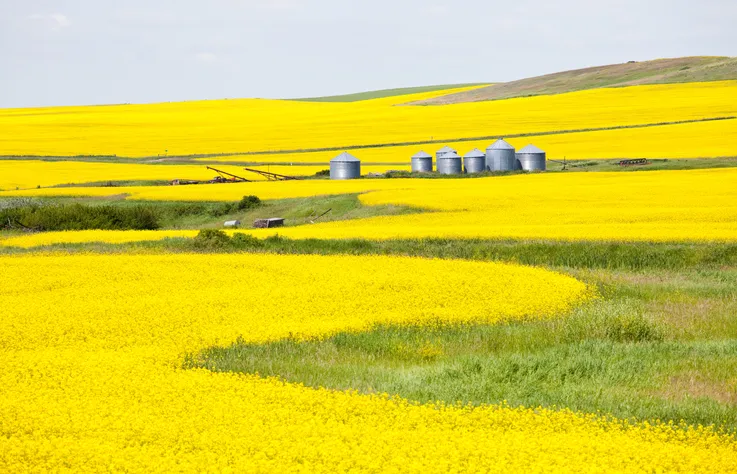
The answer arrived on Canada Day, hidden in a product most Canadians could not name. China imposed a preliminary 73.5 per cent anti-dumping duty on Canadian pea starch, effective July 1. Processors produce pea starch when they fractionate yellow peas into protein, starch and fibre, turning a Prairie crop into higher-value ingredients. Pea starch sounds obscure. The politics behind it are not.
Why pea starch? Start in the autumn of 2024. Ottawa slapped a 100 per cent surtax on Chinese electric vehicles, then a 25 per cent surtax on Chinese steel and aluminum, to shelter Canadian auto and metal jobs clustered along the Ontario-Quebec industrial corridor. At the centre of that policy sits an electric-vehicle supply chain stretching from Windsor and St. Thomas, Ontario, to Bécancour, Quebec. The Parliamentary Budget Officer estimated federal and provincial support for thirteen announced EV supply-chain projects across Canada at up to $52.5 billion.
Beijing did not retaliate against Ontario and Quebec. It retaliated against Saskatchewan. Within days of Ottawa’s announcement, China opened an anti-dumping case against Canadian canola. By 2025, it had hit canola oil, meal and seed, along with peas, pork and seafood. Most of the agricultural products came disproportionately from the Prairies. The seafood duties struck coastal producers as well. China presents the pea starch measure as a trade remedy. In the context of the continuing tariff dispute, Prairie processors can be forgiven for seeing something more familiar: another invoice from a trade war Ottawa began to protect Central Canadian industry.
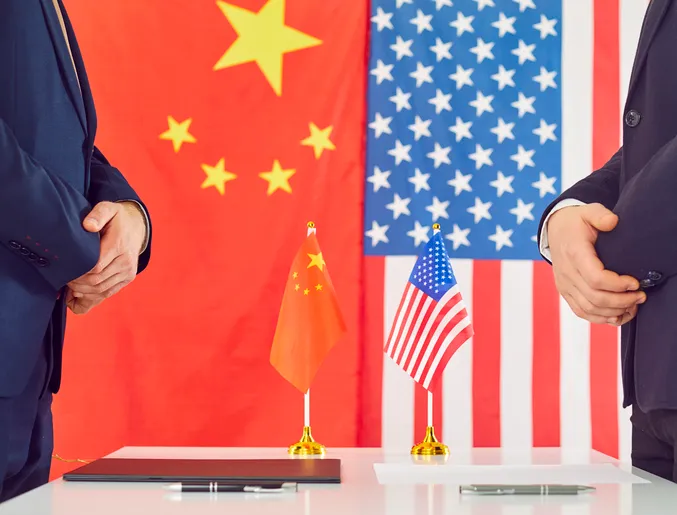
Campaigning in April 2025, Mark Carney called China “the biggest threat from a geopolitical sense.” Nine months later, as prime minister, he stood in Beijing, announced a new strategic partnership, and told reporters, “We take the world as it is, not as we wish it to be.” He called the partnership one that “sets us up well for the new world order.”
The deal was plain. Canada would admit up to 49,000 Chinese electric vehicles a year at a 6.1 per cent tariff. In return, Ottawa expected China to ease its canola duties.
Ontario Premier Doug Ford, watching the deal reopen his market to Chinese cars, was incensed for his auto workers, and his grievance ran across the country for days. Saskatchewan Premier Scott Moe welcomed relief for his farmers. Western canola was the collateral when the wall went up and the hostage Ottawa had to ransom to bring it down.
Ontario and Quebec are unused to paying for the nation’s trade wars. The Prairies had swallowed a year of retaliation and raised nothing like the same alarm. The Ontario-Quebec bill became a national event. The Western one arrives every season.
Now weigh what Ottawa’s industrial policy protected. Electric vehicle sales fell through 2025. Carney first suspended the 2026 sales requirement and later announced the repeal of the federal Electric Vehicle Availability Standard. Quebec’s flagship Northvolt plant collapsed before it opened, costing the province a $270-million writeoff. The Windsor cell plant did open, though only after Stellantis, the carmaker that founded it, sold out to its Korean partner. The strategy remained expensive even as its promise faded. The Prairies pay a live duty to shelter that strategy.
The issue is larger than electric vehicles. It is about who benefits from Ottawa’s industrial policy and who pays for it. Any national industrial policy that concentrates its benefits in one region while exposing another to retaliation will breed the same politics. The West grows the exports. Ontario and Quebec keep the factories. Ottawa writes the tariff. Beijing sends the bill to the address with the least say in the decision.
That returns us to the arithmetic. A region can absorb one bad tariff. A region can absorb a poor bargain struck in its name. What it cannot do is out-vote the arrangement that produces both, when the seats that decide trade policy sit where the factories sit and the votes that might change it sit where the farms sit.
The math held before pea starch. It holds after.
Dr. Marco Navarro-Génie is the Vice-President of Research and Policy at the Frontier Centre for Public Policy.